Manifestation
Manifestation: The Science and Practice of Creating a Better Life
For your convienence this page is available to download as a pdf https://addingtowealth.com/wp-content/uploads/2026/03/Manifestation.pdf
CHAPTERS
INTRODUCTION
1. The Rise of Manifestation: Why Millions Are Turning to Mindset Tools
A cultural and psychological overview of why manifestation has become a global self improvement movement.
2. What Is Manifestation Really? Separating Myth from Method
A grounded definition that distinguishes manifestation from superstition, magical thinking, or passive wishing.
3. The Science Behind Manifestation: How Thoughts Influence Behavior and Outcomes
Explores research in:
- Cognitive psychology
- Neuroplasticity
- The Reticular Activating System (RAS)
- Expectancy theory
- The placebo effect
- Goal priming studies
This chapter will anchor manifestation in established scientific principles.
4. The Brain on Belief: How Visualization and Intention Shape Neural Pathways
A deeper dive into how mental rehearsal, imagery, and intention-setting activate brain regions associated with motivation, planning, and emotional regulation.
5. Manifestation for Health and Well Being
How mindset practices can support:
- Stress reduction
- Habit formation
- Improved emotional resilience
- Health related behavior change
6. Manifestation for Relationships: Attracting Connection Through Self Concept
How self perception, emotional regulation, and communication patterns influence the relationships we create and maintain.
7. Confidence, Identity, and the Manifested Self
How manifestation practices help reshape self identity, reduce limiting beliefs, and build confidence to face life’s challenges.
8. Manifesting Wealth: The Psychology of Abundance and Financial Behavior
A research supported look at how mindset influences:
- Risk taking
- Opportunity recognition
- Financial habits
- Long term goal pursuit
9. The Role of Emotion: Why Feeling States Matter in the Manifestation Process
Exploring emotional coherence, somatic responses, and how positive affect enhances cognitive flexibility and motivation.
10. Action Meets Intention: The Missing Link in Effective Manifestation
A practical chapter on how manifestation works with action, not instead of it — supported by behavioral science.
11. Tools and Techniques: Evidence Aligned Manifestation Practices
Including:
- Visualization
- Scripting
- Gratitude practices
- Affirmations
- Cognitive reframing
- Goal setting frameworks
12. Common Misconceptions and Pitfalls
A balanced, responsible chapter addressing:
- Misuse of manifestation
- Toxic positivity
- Over reliance on mindset without action
- Ethical considerations
13. Real World Stories: How People Use Manifestation to Transform Their Lives
A narrative chapter highlighting diverse examples — health, relationships, career, confidence, and wealth.
14. Building Your Manifestation Practice: A Step by Step Framework
A practical, structured guide readers can follow to create their own manifestation routine.
15. The Future of Manifestation: Where Science and Spirituality Converge
A forward looking chapter exploring emerging research and the evolving role of mindset tools in personal development.
CONCLUSION
Introduction
Manifestation: The Science and Practice of Creating a Better Life
Manifestation has become one of the most talked about personal development tools of the modern era. From entrepreneurs and athletes to students, parents, and everyday people, millions are turning to manifestation to improve their health, relationships, confidence, and financial well being. What was once dismissed as “wishful thinking” is now being re examined through the lens of psychology, neuroscience, and behavioral science — and the findings are far more compelling than skeptics might expect.
At its core, manifestation is the practice of intentionally directing your thoughts, emotions, and behaviors toward a desired outcome. It is not magic, nor is it a passive hope that the universe will deliver your dreams without effort. Instead, manifestation is a mindset technology — a structured way of thinking that influences how you perceive opportunities, make decisions, regulate emotions, and take action.
Scientific research increasingly supports the idea that our beliefs, expectations, and mental imagery can shape our behavior and, ultimately, our results. Studies on neuroplasticity show that the brain rewires itself based on repeated thoughts. Research on the Reticular Activating System (RAS) demonstrates that what we focus on becomes more noticeable in our environment. Psychological theories like expectancy theory and self efficacy reveal that belief in an outcome increases the likelihood of achieving it. Even the placebo effect — one of the most documented phenomena in medicine — highlights the profound influence of belief on physical and emotional states.
This mini book explores manifestation through a grounded, evidence aligned perspective. You’ll discover how mindset practices can support health, strengthen relationships, build confidence, and even influence financial behavior. You’ll also learn how to avoid common misconceptions and use manifestation as a practical, empowering tool for personal growth.
Let’s begin with the cultural shift that brought manifestation into the mainstream.
Chapter One: The Rise of Manifestation — Why Millions Are Turning to Mindset Tools
If you’ve ever felt like life is moving faster than you can keep up with, you’re not alone. The world has become louder, busier, and more demanding than ever, and people everywhere are looking for ways to feel more grounded, more hopeful, and more in control of their lives. That’s one of the big reasons manifestation has become so popular — not because it’s trendy, but because people are craving tools that help them reconnect with themselves.
Manifestation offers something many of us don’t get enough of: a moment to pause and ask, “What do I actually want?” In a world full of noise, that question can feel like a lifeline.
Millions of people are turning to manifestation because it gives them a sense of agency. It reminds them that even when life feels chaotic, they still have power over their thoughts, their choices, and the way they show up each day. And that’s comforting. It’s empowering. It’s human.
Social media has played a role too — not just by spreading ideas, but by giving people a place to share their stories. When you see someone talk about how they manifested a healthier mindset, a new job, a loving relationship, or a sense of peace they never thought possible, it sparks something inside you. It makes you wonder, “Could that be possible for me too?”
And then there’s the science. As more people learn about things like neuroplasticity, emotional regulation, and the power of belief, manifestation starts to feel less like a mystical concept and more like a practical tool. It becomes a way of working with your mind instead of fighting against it.
But maybe the biggest reason manifestation is rising is because people are tired of feeling disconnected from themselves. They want meaning. They want purpose. They want to feel like they’re participating in their lives, not just reacting to them. Manifestation gives them a way to do that — gently, intentionally, and in a way that feels personal.
It’s not about perfection. It’s about possibility. And that’s something people are hungry for.
Chapter Two: What Manifestation Really Is Separating Myth from Method
Manifestation is one of those words that can mean a hundred different things depending on who you ask. For some, it’s deeply spiritual. For others, it’s a mindset practice. And for many, it’s something they’ve heard about but never fully understood.
So let’s make it simple.
Manifestation is really just the practice of choosing what you want to focus on — and then aligning your thoughts, emotions, and actions with that choice. It’s about becoming intentional instead of reactive. It’s about guiding your mind instead of letting your mind run the show.
A lot of people think manifestation means sitting around imagining a better life until it magically appears. But that’s not how it works. Manifestation isn’t passive. It’s not about wishing. It’s about aligning.
When you get clear on what you want, you start noticing things you used to overlook.
When you believe something is possible, you behave differently.
When you treat yourself with more compassion, you make choices that support your growth.
When you take small steps toward your goals, you build momentum.
That’s manifestation in action.
It’s not about controlling everything — life will still be life. You’ll still have challenges, setbacks, and days when nothing goes the way you planned. But manifestation helps you navigate those moments with more resilience and clarity. It helps you stay connected to what matters instead of getting pulled into fear or self doubt.
And the beautiful thing is, manifestation doesn’t have to look a certain way. You don’t need crystals or rituals or perfect affirmations. You don’t need to meditate for an hour or visualize every detail of your future. You just need a willingness to look inward and a desire to grow.
Manifestation is personal. It adapts to you. It meets you where you are. And it grows with you as you grow.
At its core, manifestation is simply this:
a way of thinking and living that helps you create a life that feels more aligned with who you truly are.
And once you understand that, everything else starts to make sense.
Chapter Three: The Science Behind Manifestation — How Thoughts Influence Behavior and Outcomes
Let’s talk about the part of manifestation that often surprises people: the science. Because while manifestation is sometimes wrapped in spiritual language, the way it actually works lines up with what researchers have been studying for decades.
Think about a time when you were excited about something — a new job, a new relationship, a new idea. Remember how energized you felt? How motivated? How everything seemed to “flow” a little easier? That wasn’t magic. That was your brain responding to your focus, your belief, and your emotional state.
Manifestation taps into those same mechanisms.
For example, your brain is constantly rewiring itself based on what you think about most. This is called neuroplasticity. When you repeatedly imagine a goal or rehearse a new belief, your brain starts treating it like something real and achievable. It builds new pathways that make it easier for you to act in ways that support that goal.
Then there’s the Reticular Activating System — a tiny network in your brain that acts like a filter. It decides what you notice and what you ignore. When you set an intention, your brain starts paying attention to anything that might help you move toward it. It’s the same reason you suddenly see the same car everywhere after you think about buying one. Your brain is simply tuned in.
Belief also plays a huge role. Not in a mystical sense, but in a very practical one. When you believe something is possible, you behave differently. You take more chances. You stay committed longer. You recover from setbacks faster. Psychologists have studied this for years — it’s called expectancy. And it’s one of the strongest predictors of success in almost any area of life.
Even the placebo effect — something doctors have documented thousands of times — shows how powerful belief can be. When people expect to feel better, their bodies often respond as if they’ve received real treatment. That’s not imagination. That’s biology.
And then there’s emotion. When you feel hopeful, grateful, or inspired, your brain works better. You think more creatively. You solve problems more easily. You connect with people more naturally. You’re more resilient. Manifestation practices often focus on emotion because emotion changes how your brain functions in the moment.
Put all of this together, and manifestation stops looking like magic and starts looking like a practical way to work with your mind instead of against it.
You’re not “attracting” things out of thin air.
You’re becoming the kind of person who notices opportunities, believes in them, and takes action on them.
That’s the real power of manifestation — and it’s something anyone can learn to use.
Chapter Four: The Brain on Belief — How Visualization and Intention Shape Your Mind
If you’ve ever daydreamed about something wonderful — a new home, a healthier body, a relationship that feels safe and loving — you already know what visualization feels like. It’s that moment when your mind drifts into a version of life that feels a little brighter, a little more possible.
What most people don’t realize is that this simple act of imagining isn’t just “in your head.” Your brain responds to mental imagery almost the same way it responds to real experiences. That’s why athletes visualize their routines before competitions. It’s why performers rehearse in their minds before stepping on stage. They’re not doing it for fun — they’re doing it because it works.
When you visualize something, your brain begins to build familiarity with it. It starts treating that imagined outcome as something you’re capable of. And when your brain believes you’re capable, you start behaving like someone who is.
You make different choices.
You take different risks.
You show up with a different energy.
This is one of the quiet powers of manifestation. It helps you rehearse the life you want so you can step into it with more confidence.
Intention works the same way. When you set an intention — even a simple one like “I want to feel more grounded today” — you’re giving your mind a direction. You’re telling your brain what to look for, what to prioritize, what to amplify. And your brain listens more than you think.
You’ve probably experienced this without realizing it. Maybe you decided you wanted to be more patient, and suddenly you noticed moments where you paused instead of reacting. Or you set an intention to be more open to opportunities, and suddenly you found yourself saying yes to things you would’ve ignored before.
That’s not coincidence. That’s your mind aligning with your intention.
Visualization and intention aren’t about pretending everything is perfect. They’re about gently guiding your brain toward the version of you that feels more empowered, more hopeful, and more aligned with the life you want to create.
And the more you practice, the more natural it becomes.
Chapter Five: Manifestation for Health and Well Being
Let’s talk about something deeply personal: your well being. Most people don’t turn to manifestation because everything in their life is perfect. They turn to it because they want to feel better — physically, emotionally, mentally, or all of the above.
And that makes sense. When life feels heavy, when stress builds up, when your body feels tired or your mind feels scattered, you start looking for tools that help you feel more grounded and more in control. Manifestation can be one of those tools.
Not because it magically fixes everything, but because it helps you shift the way you relate to yourself.
For example, when you use manifestation to support your health, you’re really doing a few things at once:
You’re calming your nervous system.
You’re reducing stress.
You’re focusing on what you can influence.
You’re building habits that support healing.
You’re treating yourself with more compassion.
And compassion matters. A lot.
Think about how you talk to yourself when you’re struggling. Most people are far harsher with themselves than they would ever be with someone they love. Manifestation encourages you to soften that inner voice — to speak to yourself with the same kindness you’d offer a friend.
That shift alone can change everything.
People use manifestation to support their health in all kinds of ways. Some visualize their bodies getting stronger. Some set intentions around rest, nourishment, or movement. Some use affirmations to break old patterns of self criticism. Others simply use manifestation as a reminder to slow down and reconnect with themselves.
And while manifestation isn’t a replacement for medical care or professional support, it can absolutely complement the healing process. When you feel more hopeful, more centered, and more connected to your goals, you’re more likely to make choices that support your well being.
The same is true for emotional health. Manifestation helps you notice your patterns, question your beliefs, and gently shift the way you respond to life. It helps you build resilience — not by pretending everything is fine, but by helping you trust that you can handle what comes your way.
At the end of the day, manifestation isn’t just about creating a better future. It’s about taking care of yourself in the present. It’s about giving yourself permission to feel supported, empowered, and worthy of the life you’re trying to build.
And that’s something everyone deserves.
Chapter Six: Manifestation for Relationships — Attracting Connection Through Self Concept
Relationships are one of the biggest reasons people turn to manifestation. Not because they’re trying to “manifest a specific person” or force something that isn’t meant for them, but because deep down, we all want to feel loved, understood, and connected. And sometimes, we’re not sure how to get there.
Here’s the truth most people don’t talk about:
The relationships you attract — and the ones you keep — often reflect the relationship you have with yourself.
That’s not meant to blame you. It’s meant to empower you.
When you believe you’re worthy of kindness, you stop settling for people who treat you poorly.
When you see yourself as lovable, you show up with more openness and less fear.
When you trust your own voice, you communicate more clearly and confidently.
When you heal old wounds, you stop repeating old patterns.
Manifestation helps with all of this because it invites you to look inward before you look outward. It encourages you to ask questions like:
- What kind of love do I want to experience
- What kind of partner do I want to be
- What beliefs about relationships am I still carrying from the past
- What do I need to release so I can receive something better
These questions aren’t always easy, but they’re powerful. They help you shift from “Why doesn’t anyone choose me?” to “How can I choose myself more fully?” And that shift changes everything.
People often think manifestation is about attracting someone new, but more often, it’s about becoming someone new — someone who feels safe being seen, someone who knows their worth, someone who doesn’t abandon themselves to keep others close.
When you start showing up that way, your relationships naturally begin to change. Some people fall away. Others step closer. New connections appear. Old wounds soften. Communication becomes easier. Boundaries feel less scary.
And yes — sometimes love shows up in ways you didn’t expect.
Manifestation doesn’t guarantee a perfect relationship, but it helps you create healthier ones. It helps you attract people who match the energy you’re cultivating within yourself. And it helps you build connections that feel more aligned, more supportive, and more real.
Because at the end of the day, the most powerful thing you can manifest in your relationships is a version of yourself who feels worthy of the love you’re seeking.
Chapter Seven: Confidence, Identity, and the Manifested Self
If there’s one thing that quietly shapes every part of your life — your goals, your relationships, your habits, your opportunities — it’s your sense of identity. Who you believe you are sets the tone for everything you do.
And this is where manifestation becomes incredibly personal.
Most people don’t struggle because they lack potential. They struggle because they’re carrying old stories about who they are. Stories they didn’t choose. Stories that came from childhood, past relationships, failures, or moments when life felt too heavy.
Stories like:
“I’m not good enough.”
“I always mess things up.”
“I’m not the kind of person who succeeds.”
“People like me don’t get what they want.”
These beliefs don’t just sit in your mind — they shape your behavior. They influence the risks you take, the opportunities you pursue, the boundaries you set, and the dreams you allow yourself to imagine.
Manifestation helps you rewrite those stories.
Not by pretending they never existed, but by gently questioning them. By asking yourself, “Is this belief actually true? Or is it just familiar?” By choosing new thoughts that support the person you want to become instead of the person you’ve been taught to be.
Confidence isn’t something you’re born with. It’s something you build — one belief, one action, one moment of courage at a time.
When you use manifestation to build confidence, you’re really doing three things:
You’re imagining a version of yourself who feels capable and grounded.
This gives your mind a blueprint to follow.
You’re practicing thoughts that support that version of you.
This strengthens the identity you’re stepping into.
You’re taking small actions that reinforce your new self concept.
This turns confidence from an idea into a lived experience.
And the beautiful thing is, you don’t have to feel confident to start. You just have to be willing to take one small step toward the person you want to become.
Maybe that means speaking up when you’d normally stay quiet.
Maybe it means saying no when you’d usually say yes.
Maybe it means applying for something you feel unqualified for.
Maybe it means being kinder to yourself on the days you feel like you’re falling behind.
Every time you choose the version of you that feels more empowered, you strengthen that identity. And over time, that identity becomes your new normal.
Manifestation isn’t just about creating a better life — it’s about becoming someone who believes they deserve one. And that shift in identity is one of the most transformative parts of the entire process.
Chapter Eight: Manifesting Wealth — The Psychology of Abundance and Financial Behavior
Money is one of the most emotionally charged topics in people’s lives. It’s tied to safety, freedom, opportunity, and sometimes even identity. So it’s no surprise that many people turn to manifestation when they want to improve their financial situation.
But here’s something important:
Manifesting wealth isn’t about pretending you’re rich or waiting for a miracle. It’s about shifting the way you think about money so you can shift the way you interact with it.
Most of us grew up with beliefs about money that we didn’t choose. Maybe you heard things like:
“Money is hard to come by.”
“People like us don’t get ahead.”
“You have to struggle to succeed.”
“Wanting more is selfish.”
These beliefs sink in quietly, and before you know it, they shape your financial decisions. They influence how you save, how you spend, how you take risks, and even what you believe you deserve.
Manifestation helps you gently challenge those old stories.
It invites you to ask:
What if money didn’t have to be a source of stress?
What if I’m allowed to want more?
What if wealth could feel supportive instead of overwhelming?
When you start shifting your mindset around money, your behavior naturally begins to change. You notice opportunities you used to overlook. You make choices that align with long term goals instead of short term fear. You stop talking yourself out of possibilities because you “don’t feel ready.”
And no — this doesn’t mean you ignore reality. It means you stop letting fear run the show.
People who manifest wealth successfully aren’t sitting around waiting for a check to fall from the sky. They’re doing things like:
• Taking small, consistent steps toward financial stability
• Learning new skills
• Saying yes to opportunities that once felt intimidating
• Setting boundaries around spending
• Allowing themselves to believe they’re capable of more
When you combine a healthier money mindset with aligned action, things start to shift. Not overnight, but steadily — in ways that feel empowering rather than stressful.
Manifesting wealth is really about manifesting a new relationship with money. One that feels grounded, confident, and open to possibility.
And that’s something anyone can learn to cultivate.
If you are desirous to use manifestation to improve your financial position you may be interested in my book dedicated to this 100 Wealth Manifestations.
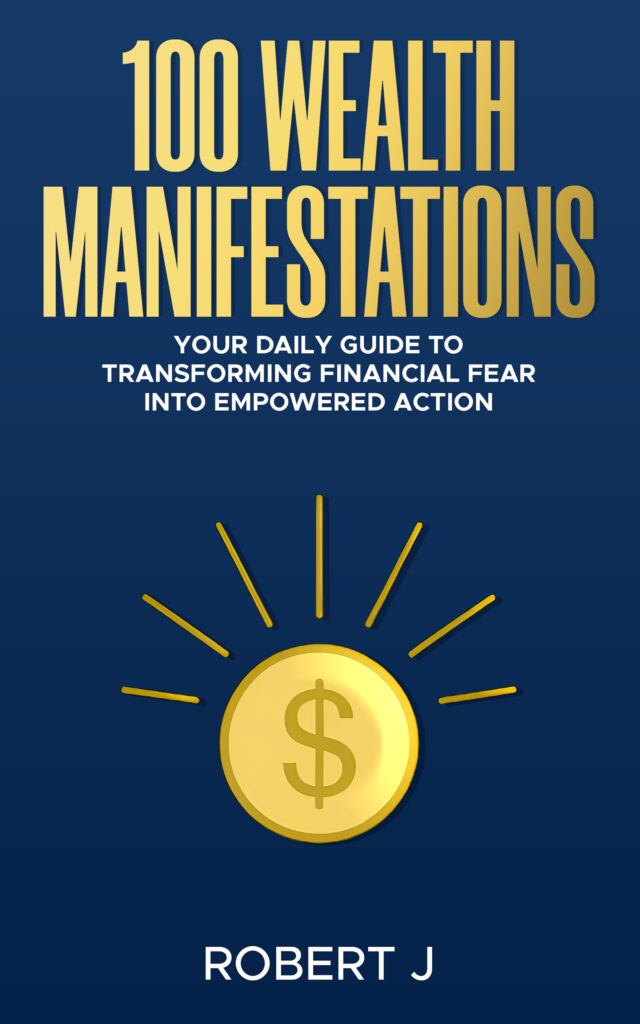
Unlock the mindset of abundance with 100 Wealth Manifestations – your daily guide to transforming financial fear into empowered action. This uplifting collection of affirmations is more than just positive thinking. It is a practial tool for rewiring your beliefs, aligning your energy, and stepping boldly into the welath you deserve.
Whether you’re just beginning your financial journey or seeking to elevate your current success, each manifestation is crafted to dissolve limiting money stories and replace them with clarity, confidence, and purpose. From cultivating gratitude to embracing bold financila decisions, this book helps you shift from scarcity to sufficiency – one powerful thought at a time.
Perfect for morning rituals, journaling prompts, or midday mindset resets, 100 Wealth Manifestations is your companion for building not just wealth, but a wealthy identity. It you’re ready to stop playing small and start manifesting a life of financail freedom, this book is your invitation to rise.
Wealth isn’t just a number, It’s a mindset and it starts here.
Chapter Nine: The Role of Emotion — Why Feeling States Matter in the Manifestation Process
If there’s one thing people often misunderstand about manifestation, it’s the role of emotion. Some think they have to be positive all the time. Others think emotions don’t matter at all. The truth is somewhere in the middle — and much more compassionate.
Your emotions aren’t obstacles. They’re signals. They tell you what you need, what you value, and where you’re out of alignment. And when it comes to manifestation, your emotional state can either support your goals or make them feel harder to reach.
Think about a time when you felt hopeful or inspired. Everything felt lighter. You had more energy. You were more open to possibilities. You took action without overthinking. That emotional state didn’t magically create results — but it made it easier for you to move toward them.
Now think about a time when you felt discouraged or overwhelmed. Even simple tasks felt heavy. You second guessed yourself. You avoided decisions. You shrank your goals because they felt too big. That emotional state didn’t block your dreams — but it made them harder to pursue.
This is why emotion matters in manifestation. Not because you need to be happy all the time, but because your emotional state influences your behavior, your focus, and your sense of possibility.
Manifestation practices like visualization, gratitude, and affirmations aren’t about forcing positivity. They’re about helping you shift into emotional states that support your growth.
When you feel even a little more hopeful, you think differently.
When you feel a little more grounded, you make clearer decisions.
When you feel a little more confident, you take steps you’ve been avoiding.
And those small emotional shifts add up.
But here’s the part people often forget:
You don’t have to suppress your difficult emotions to manifest. In fact, acknowledging them is part of the process.
You’re allowed to feel scared and still move forward.
You’re allowed to feel uncertain and still set intentions.
You’re allowed to feel sad and still believe in better days.
Manifestation isn’t about perfection — it’s about alignment. And alignment doesn’t mean “always positive.” It means being honest with yourself and choosing thoughts and actions that support where you want to go, even if you’re not there yet.
Your emotions are part of your journey, not a barrier to it. When you learn to work with them instead of against them, manifestation becomes less about forcing a feeling and more about gently guiding yourself toward the life you want to create.
Chapter Ten: Action Meets Intention — The Missing Link in Effective Manifestation
There’s a moment in everyone’s manifestation journey when they realize something important:
thinking about a better life and actually creating one are two different things.
Manifestation isn’t about sitting back and hoping the universe rearranges itself for you. It’s about letting your intentions guide your actions in a way that feels aligned, empowered, and doable.
Think of intention as the spark — the thing that lights you up, gives you direction, and helps you remember what you’re working toward. But action is the fuel. Without it, the spark fades. With it, the spark becomes something real.
A lot of people struggle with this part because they think action has to be huge or dramatic. But most of the time, the actions that change your life are small, steady, and consistent. They’re the choices you make on ordinary days — the ones that don’t look like much in the moment but add up over time.
Maybe it’s sending an email you’ve been avoiding.
Maybe it’s taking a class that scares you a little.
Maybe it’s choosing a healthier meal, or going for a walk, or setting a boundary.
Maybe it’s finally saying “yes” to something you’ve been talking yourself out of.
These small steps matter because they reinforce your belief in yourself. They tell your brain, “I’m serious about this. I’m moving toward it.” And once you start taking action, even tiny action, momentum builds.
Manifestation works best when intention and action work together.
Intention gives you clarity.
Action gives you progress.
Together, they create change.
And here’s the part that often surprises people:
You don’t have to feel ready to take action. You just have to be willing.
Willing to try.
Willing to learn.
Willing to take imperfect steps.
Willing to show up for yourself even when it feels uncomfortable.
Manifestation isn’t about forcing yourself to hustle or grind. It’s about taking aligned action — the kind that feels meaningful, supportive, and connected to the life you want to create.
When you combine intention with action, you stop waiting for your life to change and start participating in the change. And that’s where the real magic happens.
Chapter Eleven: Tools and Techniques — Evidence Aligned Manifestation Practices
One of the most beautiful things about manifestation is that there’s no single “right” way to do it. Different tools work for different people, and the best practice is the one that feels natural and supportive to you.
Here are some of the most popular manifestation techniques — not as rigid rules, but as gentle invitations. Think of them as options you can explore, adapt, and make your own.
Visualization
Visualization is simply imagining the life you want in a way that feels vivid and real. You don’t need to force anything — just let yourself picture what you’re moving toward.
Some people visualize for a few minutes in the morning.
Some do it before bed.
Some do it while walking, showering, or daydreaming.
The point isn’t perfection. It’s connection — connecting with the version of you who already feels aligned with your goals.
Scripting
Scripting is like writing a letter from your future self. You describe your life as if your goals have already happened.
“I feel so proud of myself…”
“I’m waking up in a home that feels peaceful…”
“I’m surrounded by people who support me…”
This isn’t about pretending. It’s about helping your mind get familiar with the feelings you want to create.
Affirmations
Affirmations aren’t about forcing positivity. They’re about gently shifting your inner dialogue.
Instead of “I’m confident,” which might feel too far away, you can try:
“I’m learning to trust myself.”
“I’m becoming more confident every day.”
“I’m open to believing in my abilities.”
Affirmations work best when they feel believable and compassionate.
Gratitude Practices
Gratitude isn’t about ignoring what’s hard. It’s about noticing what’s good — even if it’s small.
A warm cup of tea.
A kind message.
A moment of peace.
A step forward, even if it’s tiny.
Gratitude helps your mind shift from scarcity to possibility.
Intention Setting
Setting intentions is like giving your day a gentle direction.
“Today, I want to feel grounded.”
“Today, I want to be open to opportunities.”
“Today, I want to take one step toward my goals.”
Intentions don’t pressure you. They guide you.
Cognitive Reframing
This is simply noticing a limiting belief and asking yourself, “Is this actually true?”
Often, the answer is no — it’s just familiar.
Reframing helps you replace old stories with ones that support your growth.
Goal Setting
Manifestation isn’t just about dreaming — it’s about clarity. When you know what you want, it’s easier to move toward it.
Your goals don’t have to be perfect or final. They can evolve as you do.
The Real Purpose of These Tools
These practices aren’t meant to overwhelm you. They’re meant to support you. You don’t need to use all of them. You don’t need to do them every day. You don’t need to turn manifestation into another thing you “should” be doing.
Choose what feels good.
Let go of what doesn’t.
Trust yourself to find your own rhythm.
Manifestation is not about following rules. It’s about building a relationship with yourself — one that feels hopeful, empowering, and aligned with the life you’re creating.
Chapter Twelve: Common Misconceptions and Pitfalls
If you’ve ever felt confused about manifestation, you’re not alone. A lot of people approach it with good intentions but end up feeling frustrated, discouraged, or even guilty when things don’t unfold the way they hoped. And most of the time, that frustration comes from misunderstandings about what manifestation is supposed to look like.
So let’s clear the air — gently, honestly, and without judgment.
One of the biggest misconceptions is the idea that you have to be positive all the time. That if you feel sad, anxious, or overwhelmed, you’re somehow “blocking” your manifestations. But that’s simply not true. You’re human. You’re allowed to feel everything. Manifestation isn’t about suppressing your emotions — it’s about learning from them and moving forward with compassion.
Another common pitfall is thinking manifestation works instantly. We live in a world that loves quick fixes, so it’s easy to feel discouraged when change takes time. But manifestation is a process. It’s a combination of mindset, emotion, and action — and those things unfold at their own pace. Slow progress is still progress.
Some people also fall into the trap of thinking manifestation will do the work for them. They visualize, they journal, they set intentions… but they don’t take the steps that bring those intentions to life. Manifestation isn’t a substitute for action — it’s a guide for it. It helps you align your inner world so your outer actions become more confident and consistent.
There’s also the fear of “doing it wrong.” People worry they’re not visualizing correctly, or their affirmations aren’t perfect, or they missed a day of journaling. But manifestation isn’t a test. There’s no scorecard. You can’t fail at it. You’re simply learning how to work with your mind in a new way.
And finally, there’s the misconception that manifestation is selfish — that wanting more for yourself means taking away from someone else. But abundance isn’t a pie with limited slices. Your growth doesn’t diminish anyone else’s. In fact, when you feel more fulfilled, grounded, and aligned, you often show up in ways that uplift the people around you.
The truth is, manifestation becomes much more powerful when you let go of the pressure to be perfect. When you allow yourself to be human. When you see the process as a partnership between your intentions and your actions, your dreams and your reality.
You’re not doing it wrong. You’re learning. And that’s exactly how it’s supposed to feel.
Chapter Thirteen: Real World Stories — How People Use Manifestation to Transform Their Lives
One of the most inspiring things about manifestation is how differently it shows up in people’s lives. There’s no single path, no one size fits all formula. People use manifestation in ways that reflect their personalities, their challenges, and their dreams.
And when you hear their stories, something beautiful happens — you start to see what’s possible for you, too.
Take the person who used manifestation to rebuild their confidence after a difficult breakup. They didn’t try to “attract” someone new right away. Instead, they focused on healing. They visualized themselves feeling whole again. They practiced speaking kindly to themselves. They set small intentions each day to reconnect with their own worth. And slowly, they began to feel like themselves again — stronger, clearer, more grounded.
Or the person who used manifestation to change their career. They didn’t quit their job overnight. They started by imagining what kind of work would feel meaningful. They wrote about it. They talked about it. They took small steps — updating their CV, taking a course, reaching out to people in the field. And eventually, an opportunity appeared that felt like a perfect fit. Not because it magically dropped into their lap, but because they were finally ready to see it and act on it.
Then there’s the person who used manifestation to improve their health. They didn’t try to force themselves into a strict routine. They set gentle intentions: “I want to feel more energized,” “I want to take care of my body,” “I want to feel proud of my choices.” Those intentions led to small shifts — drinking more water, moving their body in ways that felt good, choosing foods that nourished them. Over time, those small shifts added up to a healthier, happier life.
And yes, there are people who have manifested financial stability, new homes, creative opportunities, and supportive relationships. But the common thread in all these stories isn’t luck or magic — it’s alignment. It’s the moment someone decided to believe in a better version of their life and then took steps, big or small, toward making it real.
These stories aren’t meant to compare your journey to someone else’s. They’re meant to remind you that transformation is possible — not because other people are special, but because they chose to trust themselves.
Your story is unfolding, too. And you’re allowed to write it in a way that feels true to you.
Chapter Fourteen: Building Your Manifestation Practice — A Step by Step Framework
By the time people reach this point in their manifestation journey, they often feel two things at once: inspired… and a little overwhelmed. They understand the concepts, they feel the truth of it, but they’re not always sure how to bring it all together in a way that feels natural and sustainable.
So let’s make it simple.
Let’s make it gentle.
Let’s make it yours.
A manifestation practice doesn’t need to be complicated. It doesn’t need to take hours. It doesn’t need to look like anyone else’s routine. What matters most is that it feels supportive — like something that helps you reconnect with yourself rather than something you “should” be doing.
Here’s a framework you can use as a starting point, and then shape into something that fits your life:
1. Start with clarity.
Take a moment to ask yourself what you truly want. Not what you think you should want, not what other people expect from you — what you want. Even if it feels small. Even if it feels big. Even if it feels impossible. Clarity is the foundation.
2. Set an intention.
Intentions are like gentle directions for your mind. They don’t pressure you. They guide you.
“Today, I want to feel more grounded.”
“I’m open to opportunities that support my growth.”
“I’m ready to take one small step toward my goal.”
3. Connect with the feeling.
Manifestation isn’t just about thinking — it’s about feeling. Let yourself imagine what it would feel like to have what you want. Not in a forced way, but in a soft, curious way. Let the emotion rise naturally.
4. Take one aligned action.
It doesn’t have to be big. It just has to be something. A message sent. A decision made. A step taken. Action is how you show your mind — and yourself — that you’re serious.
5. Practice gratitude.
Not because everything is perfect, but because noticing what’s good helps you stay open, hopeful, and grounded. Gratitude shifts your energy in a way that supports your goals.
6. Reflect with compassion.
Some days will feel aligned. Others won’t. That’s okay. Reflection isn’t about judging yourself — it’s about understanding yourself.
“What felt good today?”
“What felt heavy?”
“What do I need tomorrow?”
7. Let it evolve.
Your practice will grow as you grow. What works today might change in a month. Let it. Manifestation is a relationship with yourself — and relationships evolve.
The most important thing to remember is this:
You don’t need to be perfect. You just need to be present.
Your practice doesn’t have to look impressive. It just has to feel true.
Chapter Fifteen: The Future of Manifestation — Where Science and Spirituality Converge
Manifestation has come a long way. What once lived on the fringes of spirituality is now being explored through psychology, neuroscience, and even behavioral economics. And as more people turn inward, seeking meaning, healing, and empowerment, manifestation is evolving right along with them.
The future of manifestation isn’t about choosing between science and spirituality — it’s about recognizing that both have something valuable to offer.
Science helps us understand how manifestation works.
Spirituality helps us understand why it matters.
Together, they create a fuller picture.
We’re already seeing this convergence. Therapists are incorporating visualization into their work. Coaches are teaching mindset and emotional regulation. Neuroscientists are studying how belief shapes behavior. Wellness practitioners are blending intention setting with nervous system support. Even workplaces are beginning to embrace mindfulness and purpose driven goal setting.
People are realizing that manifestation isn’t about magical thinking — it’s about conscious living.
And as the world becomes more complex, more uncertain, and more fast paced, the desire for conscious living is only growing. People want tools that help them feel grounded. They want practices that help them navigate stress. They want ways to reconnect with themselves in a world that constantly pulls them outward.
Manifestation offers that.
It offers a way to slow down and ask, “What do I really want?”
It offers a way to align your actions with your values.
It offers a way to build resilience, confidence, and clarity.
It offers a way to feel like you’re participating in your life, not just reacting to it.
The future of manifestation is more inclusive, more compassionate, and more grounded than ever before. It’s less about perfection and more about presence. Less about forcing outcomes and more about aligning with them. Less about “getting what you want” and more about becoming who you’re meant to be.
And perhaps most importantly, the future of manifestation is personal.
It’s shaped by your experiences, your beliefs, your growth, your journey.
You’re not just learning manifestation — you’re helping define what it becomes.
Conclusion: You Are the Author of What Comes Next
As you reach the end of this journey, take a moment to acknowledge something important: you’ve just spent time investing in yourself — your growth, your clarity, your healing, your future. That alone is a powerful act of manifestation.
If there’s one message to carry with you from these chapters, it’s this:
you are not stuck with the version of life you’ve known so far.
You are allowed to grow.
You are allowed to change.
You are allowed to want more.
And you are absolutely capable of creating it.
Manifestation isn’t about perfection or pretending everything is easy. It’s about learning to work with your mind instead of against it. It’s about choosing thoughts that support you, taking actions that align with your values, and trusting yourself enough to keep going even when the path feels uncertain.
You’ve learned that your beliefs shape your behavior, your emotions influence your decisions, and your intentions guide your attention. You’ve seen how people use manifestation to heal, to grow, to rebuild, and to step into lives that once felt out of reach. And you’ve discovered that the most powerful part of manifestation isn’t the outcome — it’s who you become along the way.
The truth is, you don’t need to have everything figured out. You don’t need to know every step. You don’t need to feel confident every day. You just need to stay connected to the version of yourself who believes in possibility — even if that belief is small, quiet, or fragile at times.
Every intention you set, every moment of clarity, every act of self compassion, every step you take — they all add up. They all move you closer to the life you’re creating. And you’re allowed to take your time. You’re allowed to grow at your own pace. You’re allowed to evolve.
Your story is still unfolding.
Your future is still open.
Your power is still expanding.
So as you close this book, don’t think of it as an ending. Think of it as a beginning — a gentle, hopeful invitation to step into the next chapter of your life with more awareness, more courage, and more trust in yourself.
You are the author of what comes next.
And you’re far more capable than you’ve ever been told.